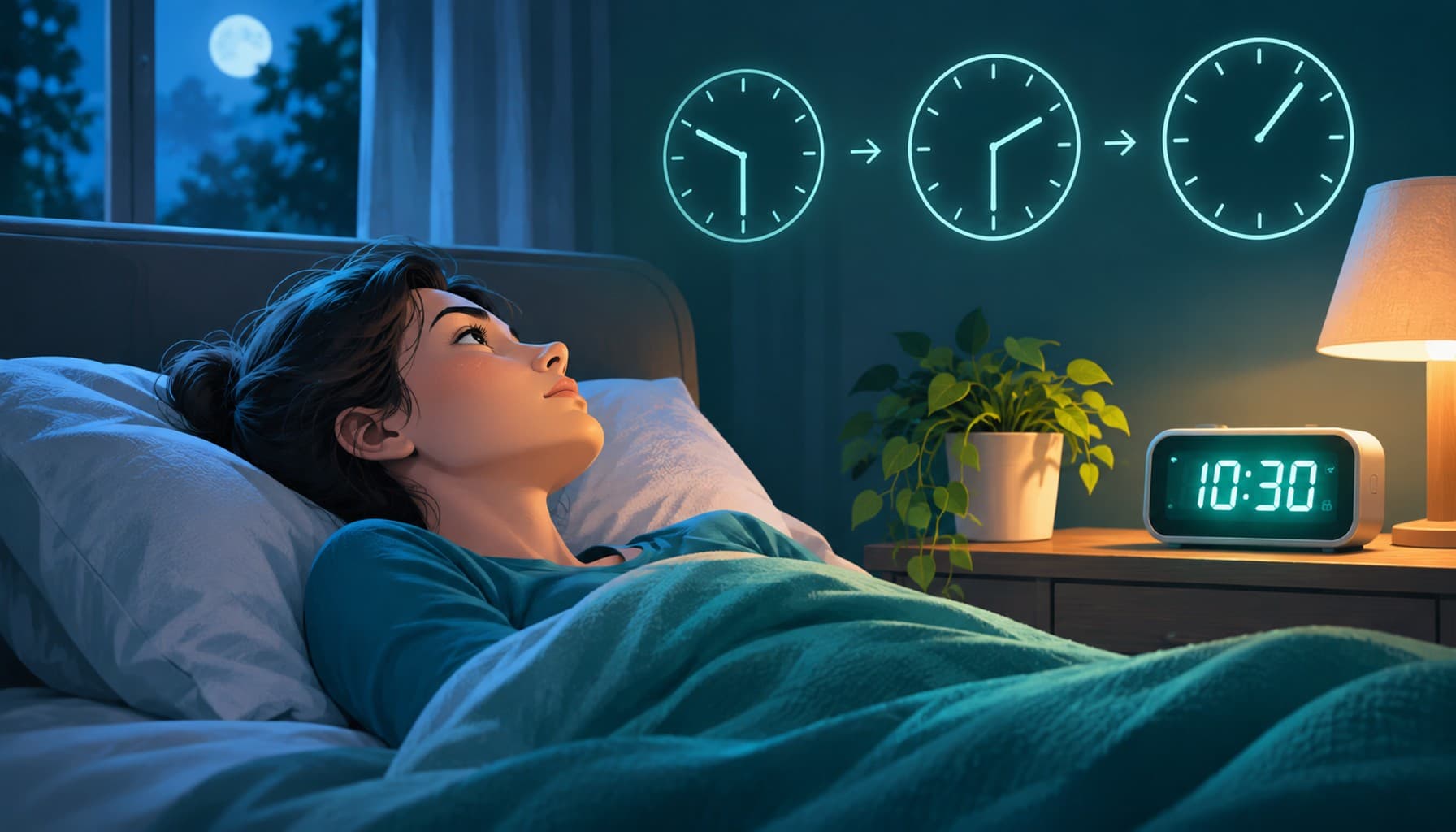


Waking at 3 AM? Make Sense of Middle-of-the-Night Insomnia
SleepScript MD Insights Team · November 10, 2026 · 9 min read
📌 Key Takeaways
Middle-of-the-night insomnia means falling asleep but waking during the night and struggling to return to sleep, particularly when the pattern recurs and affects the next day.
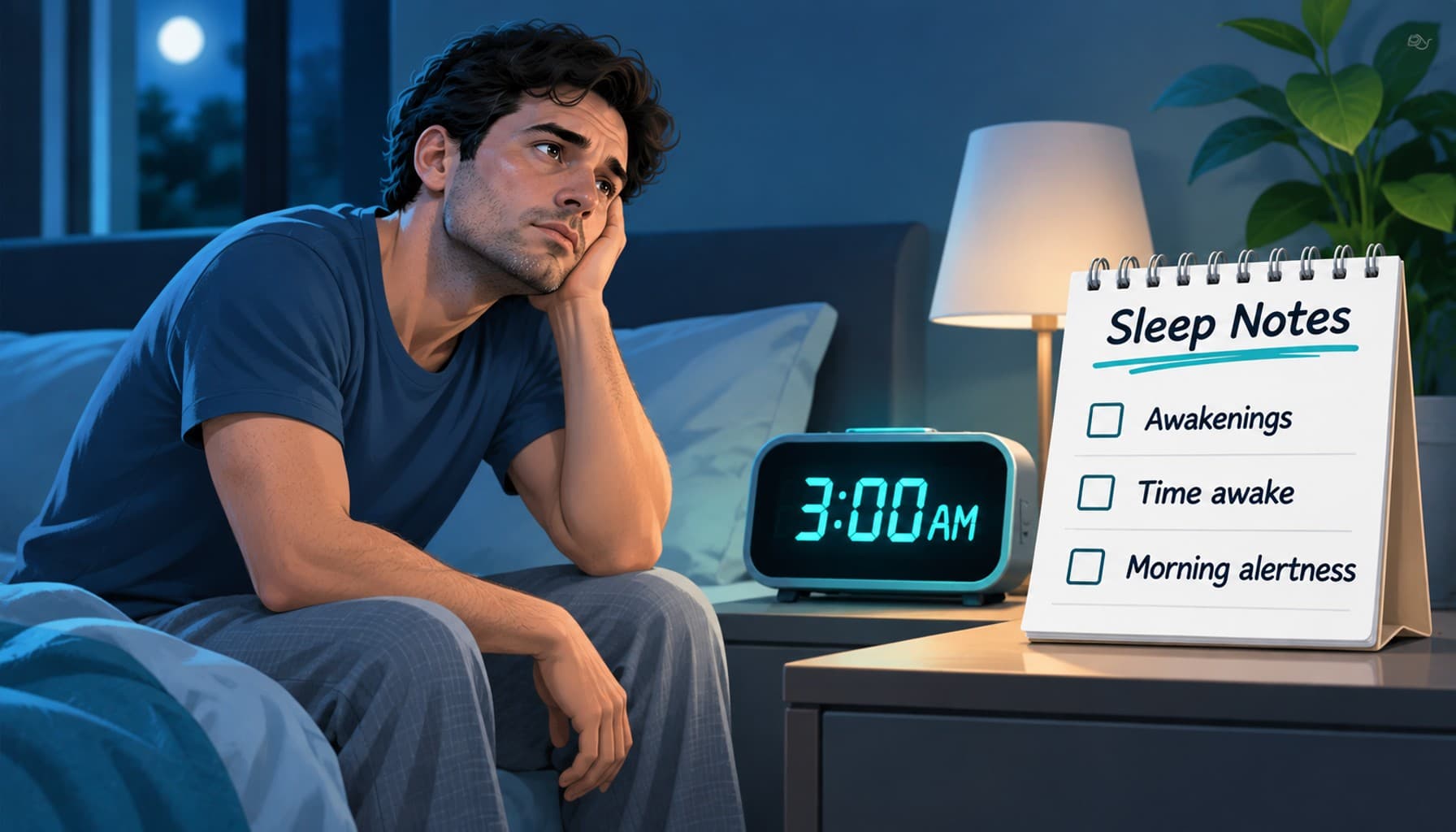
- Sleep Notes Clarify Patterns: Approximate waking times, awakening frequency, time spent awake, and next-day effects give a physician a clearer picture than clock time alone.
- Medication Requires Broader Assessment: Physicians assess medical history, current medications, previous reactions, morning alertness needs, other nighttime symptoms, and state prescribing rules alongside waking patterns.
- Breathing Signs Require Testing: SleepScriptMD requires an at-home sleep test for reported snoring, gasping, or breathing pauses, with no medication prescribed before physician review of results.
- Other Symptoms Change Evaluation: Sudden daytime sleep episodes, acting out dreams, or an uncomfortable urge to move the legs call for a different, local evaluation pathway.
- Prescription Approval Remains Conditional: SleepScriptMD uses an online quiz and board-certified physician review to assess prescription suitability, with some states requiring a brief virtual visit.
For adults considering text-based prescription care, SleepScriptMD’s service eligibility also depends on age, pregnancy status, and medical, mental health, or substance-use factors affecting medication safety.
A clear sleep description supports the conversation; a physician determines whether prescription care fits.
~ ~ ~ ~ ~ ~ ~ ~ ~ ~ ~ ~ ~ ~ ~ ~ ~ ~
You fell asleep. That part worked.
Then the bedside clock glows 3:10, and the math starts on its own. Four hours until the alarm, if sleep comes back right now. It doesn’t, and the number keeps shrinking.
If this happens most nights, you’re probably frustrated, tired before the workday begins, and unsure what the pattern means. You may also be hoping for a simple rule: wake at 3 a.m., take this specific medication. That rule doesn’t exist. A clear description of your nights is more useful, and you can start building one tonight.
Picture sleep as a door. Some people struggle to get through it at bedtime. Others get inside easily, then keep getting pushed back out. Knowing which one describes you is the starting point for Sleep-Pattern Fit: matching an accurate picture of your nights to the questions a physician needs answered.
By the end, you’ll be able to:
- Tell middle-of-the-night waking apart from trouble falling asleep.
- Record the details a physician finds useful.
- Recognize symptoms that change the care path.
- Explain why your waking pattern can’t choose a medication.
What Middle-of-the-Night Insomnia Means
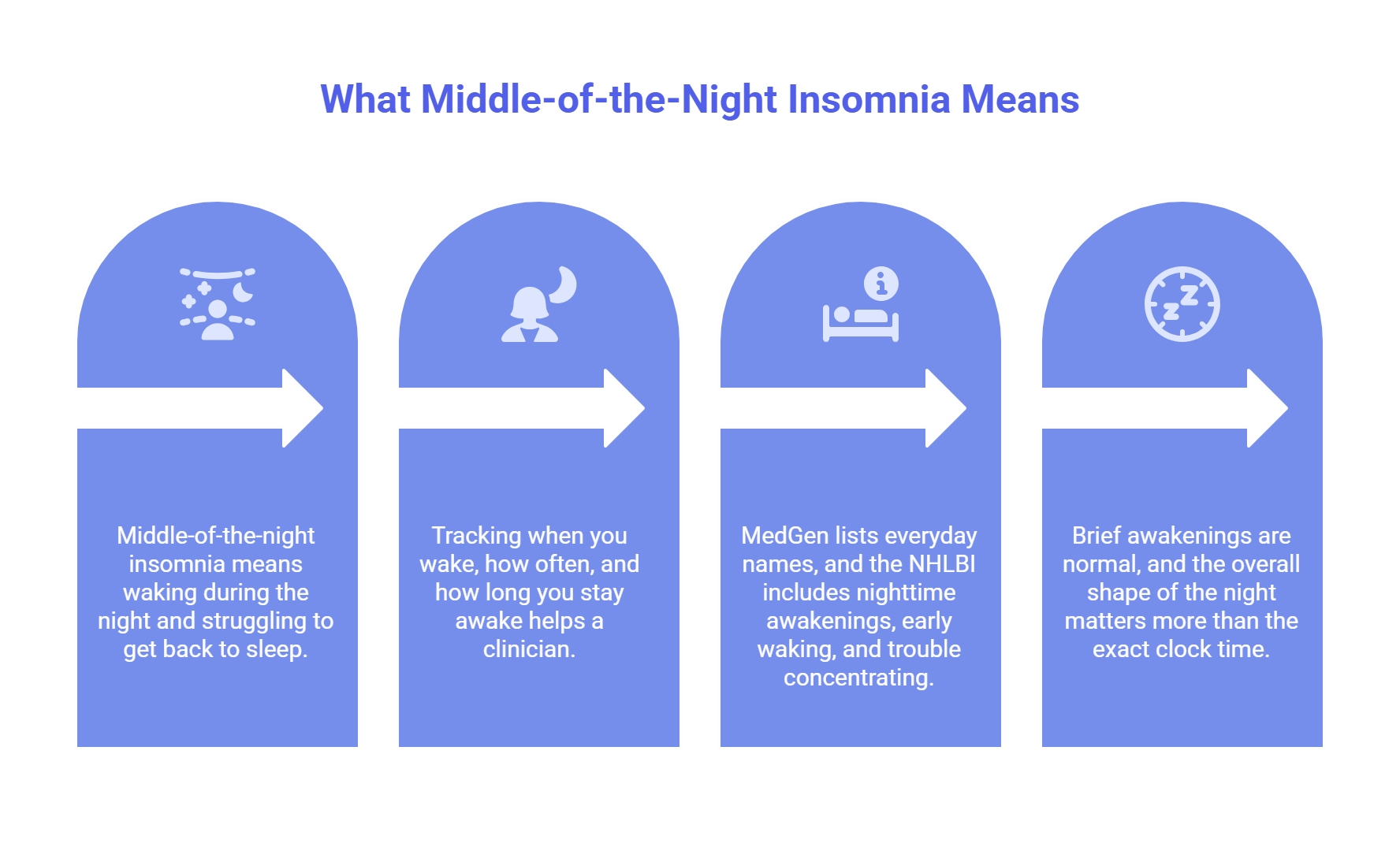
Middle-of-the-night insomnia, also called sleep-maintenance insomnia, means falling asleep but waking during the night and struggling to get back to sleep. It matters most when it keeps happening and affects the next day. Tracking when you wake, how often, and how long you stay awake helps a clinician. Those details don’t identify the right medication on their own.
The U.S. National Library of Medicine’s MedGen database lists this symptom under everyday names such as night waking, broken sleep, and difficulty staying asleep. The National Heart, Lung, and Blood Institute includes nighttime awakenings, early waking, and trouble concentrating during the day among recognized insomnia symptoms.
Brief awakenings during the night are normal, and one rough night isn’t a pattern. A late coffee or a stressful week can interrupt anyone’s sleep. The exact clock time also matters less than the overall shape of the night. Waking at 2:40 on Monday and 3:30 on Thursday is the same story told twice. Waking once and lying awake for an hour, however, tells a different story than waking three times and drifting off again within minutes.
Sleep-Onset vs. Sleep-Maintenance vs. Mixed Insomnia
Insomnia generally shows up in one of three ways, and each sounds different when you describe it.
Pattern | What you notice | How you might describe it |
|---|---|---|
Sleep-onset | Trouble falling asleep | “I lie awake a long time before sleep starts.” |
Sleep-maintenance | Waking after sleep begins | “I fall asleep, then wake and can’t get back to sleep.” |
Mixed | Both | “I struggle to fall asleep, and I wake again later.” |
This three-way split is well established in sleep research. An overview of insomnia disorder led by researcher Charles Morin sorts symptoms into these same three types and identifies the mixed type as the most common. The MedlinePlus insomnia overview describes the same basic presentations: trouble falling asleep, staying asleep, or both. In door terms, mixed means trouble getting in and trouble staying inside.
A label helps organize the conversation. It doesn’t prescribe the medication.
What to Notice When You Wake During the Night
A week of rough notes tells a clearer story than a tired memory of waking up a million times. There’s no need to watch the clock all night. A quick estimate over breakfast is enough.
Wake-Up Pattern Worksheet
- Date: the night you’re recording.
- Bedtime and first waking: approximate times.
- Trouble falling asleep at bedtime: yes or no.
- Number of awakenings: once, twice, or more.
- Longest stretch awake: a rough estimate in minutes.
- Getting back to sleep: easy, slow, or not at all.
- Final wake time: when you got up for the day.
- Morning alertness: clear, foggy, or running on empty.
- Workday impact: effects on focus, energy, or patience.
- Breathing signs: snoring, gasping, or pauses someone has noticed (yes, no, or unsure).
- Anything unusual: leg sensations, acting out dreams, or sudden daytime sleep.
A useful entry can be this short: “Bed around 10:40. Woke near 3:10, awake about 35 minutes. Foggy in morning meetings.”
Alongside tracking these patterns, practical behavioral adjustments can help reduce middle-of-the-night frustration. If you remain awake for more than roughly 20 minutes, quietly stepping out of bed into a dimly lit room to read or relax until drowsiness returns can prevent your brain from pairing the bed with wakeful stress—serving as a supportive habit alongside medical evaluation.
These notes describe your nights. They don’t diagnose anything, confirm eligibility, or point to a drug. If you already take a sleep medication, keep the dose and timing your prescriber set. Bring the notes to your prescriber or pharmacist rather than adjusting on your own.
Why Your Waking Pattern Cannot Pick a Sleep Medication by Itself
Your waking pattern is one input among several. A physician deciding whether a prescription fits also weighs:
- Your medical history and current medications.
- Past reactions to sleep meds.
- How alert you need to be the next morning, especially for driving or focused work.
- Other nighttime symptoms.
- Your state’s prescribing rules.
Here is a hypothetical example. Two coworkers both wake around 3 a.m. One is in a stressful stretch at work. The other has a partner who mentions loud snoring and the occasional gasp. The clock time is the same, but the next step is very different: the second person’s path starts with a breathing test, not a prescription.
SleepScriptMD’s Medication Education Center groups clonidine, trazodone, hydroxyzine, and doxepin as standard treatment options, with mirtazapine reserved for selected cases. None of these medications is a DEA-controlled substance, and SleepScriptMD does not prescribe benzodiazepines or Z-drugs under any circumstances. While non-controlled medications carry a significantly lower risk of misuse and dependency than traditional sedatives, they still require medical oversight to manage dosing, possible side effects, and safe discontinuation—such as tapering under clinician guidance to prevent rebound sleeplessness.
If you want to understand how each option works, our medication education pages cover general dosing, common effects, and interactions. If your question is whether any of them suits you, that decision belongs to a physician.
When Middle-of-the-Night Waking Needs a Different Path
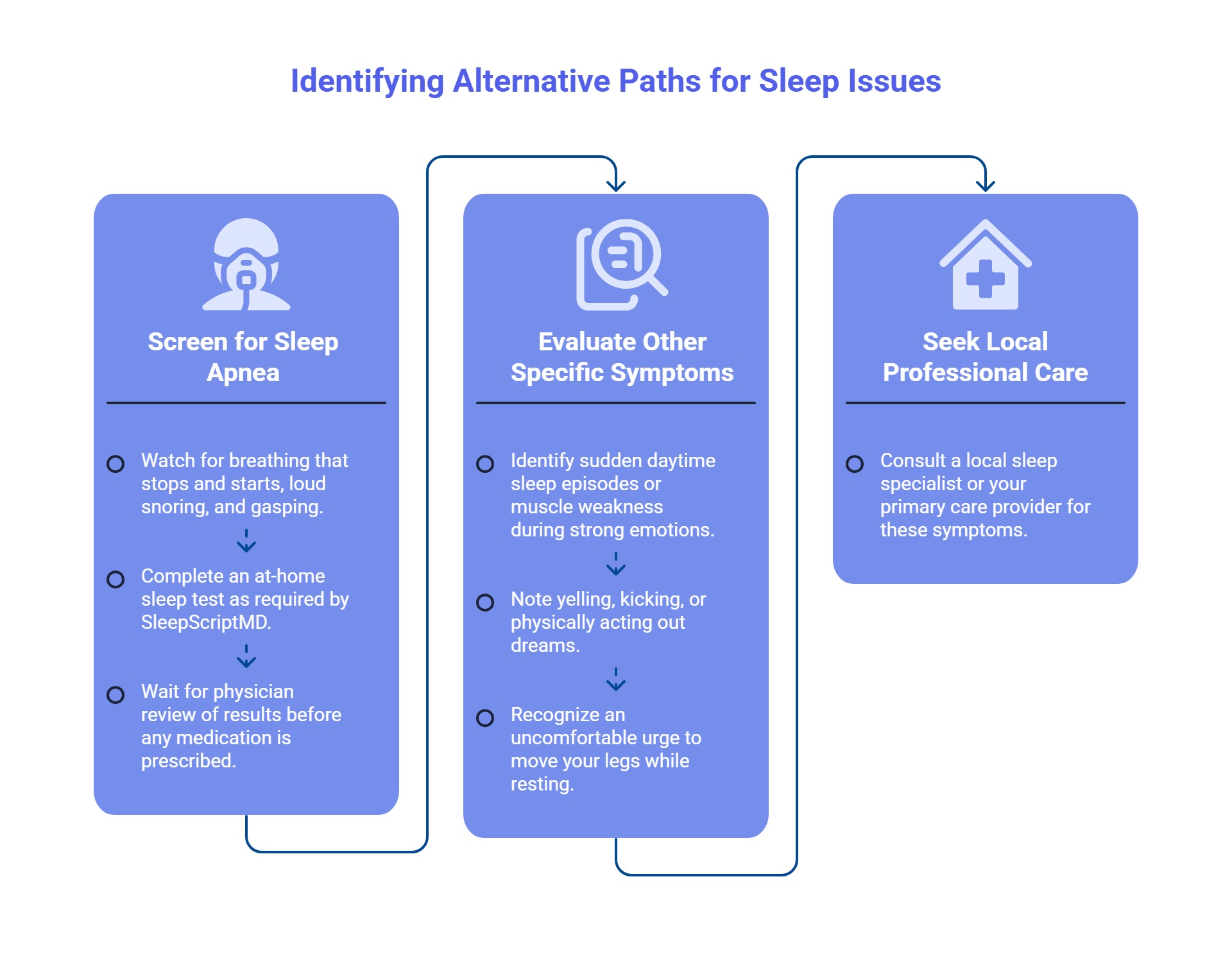
Some symptoms change the route entirely, and spotting them early saves time.
According to the National Heart, Lung, and Blood Institute, breathing that stops and starts, loud snoring, and gasping are common signs of sleep apnea, and insomnia can be a symptom too. Many people only learn about the breathing signs when someone else points them out. For that reason, SleepScriptMD requires an at-home sleep test when these signs are reported. You can continue the intake while testing is underway, but no medication is prescribed until a physician reviews the results.
Other symptoms call for local evaluation:
- Sudden daytime sleep episodes or muscle weakness during strong emotions (possible narcolepsy).
- Yelling, kicking, or physically acting out dreams (possible REM Sleep Behavior Disorder).
- An uncomfortable urge to move your legs while resting (possible Restless Legs Syndrome).
These need a different evaluation pathway. Start with a local sleep specialist or your primary care provider.
How Physician-Reviewed Text-Based Prescription Care Works
SleepScriptMD offers text-based care focused on prescription sleep medication. Its Safety-First Prescription Pathway has three parts:
- Complete a short online quiz about your sleep, on your own schedule.
- A board-certified physician reviews your responses.
- If appropriate, a non-habit-forming prescription is sent to your pharmacy.
Is a real physician reviewing this? Yes. The medical team is led by licensed, board-certified physicians, including psychiatrists and family medicine specialists.
Will this fit how I actually lose sleep? That’s what the review decides, so approval is conditional. The quiz isn’t a full sleep-disorder diagnosis. It gives the physician what they need to decide whether a prescription fits. The service is for low-risk new patients ages 18 to 65. They should have no major medical, mental health, or substance-use factors that make sleep medication unsafe, and they shouldn’t be pregnant or planning a pregnancy.
Will I need testing or an appointment? Testing applies only when breathing signs are reported. Most states require no real-time appointment, though some require a brief virtual visit before prescribing. When you’re ready, the short quiz is where the process begins.
Resources
A Clearer Description Is the First Useful Step
The next time the clock reads 3:10, it’s information, not just a countdown. You know whether your nights break at the door or after you’re inside. You also know what to write down, which symptoms change the path, and why a physician still makes the medication call.
You started out wondering whether waking at 3 a.m. even counted as insomnia. Now you can describe it well enough to get a useful answer. To learn how non-controlled options work before any decision is made, explore the Medication Education Center.
Notice it. Write it down. Let a physician take it from there.
See which non-habit-forming treatment options SleepScriptMD offers
Disclaimer: This article provides general information about middle-of-the-night insomnia and sleep-maintenance patterns for educational purposes. Individual circumstances vary significantly based on factors such as medical history, current medications, breathing symptoms, other nighttime symptoms, and state-specific prescribing requirements. For personalized guidance about whether prescription sleep medication may be appropriate for your situation, it is recommended to consult with a qualified healthcare professional.
Our Editorial Process
Our expert team uses AI tools to help organize and structure our initial drafts. Every piece is then extensively rewritten, fact-checked, and enriched with first-hand insights and experiences by expert humans on our Insights Team to ensure accuracy and clarity.
About the SleepScriptMD Insights Team
The SleepScriptMD Insights Team is our dedicated engine for synthesizing complex topics into clear, helpful guides. While our content is thoroughly reviewed for clarity and accuracy, it is for informational purposes and should not replace professional advice.