

Still Awake at Bedtime? Describe Sleep-Onset Insomnia Before Considering Prescription Aids
SleepScript MD Insights Team · November 6, 2026 · 9 min read
📌 Key Takeaways
Sleep-onset insomnia describes difficulty falling asleep at the beginning of the night, but that pattern alone cannot determine which prescription is appropriate.
- Sleep Difficulties Have Distinct Patterns: Trouble initiating sleep differs from waking after sleep begins, although both patterns can occur during the same night.
- Sleep Diaries Support Evaluation: Recording bedtime, approximate time awake, nighttime waking, and next-day effects gives a physician specific information about recurring sleep difficulties.
- Prescription Decisions Require Individual Review: A physician considers health history, other medicines, previous treatment experiences, possible side effects, and additional sleep symptoms when evaluating medication suitability.
- Breathing Symptoms Require Testing: SleepScriptMD requires an at-home sleep test for reported snoring, gasping, or breathing pauses, with results reviewed before medication is prescribed.
- Non-Controlled Medicines Still Carry Risks: Medicines discussed for insomnia are not interchangeable, and being non-controlled does not establish that a medication is suitable for an individual.
For people repeatedly struggling to fall asleep, describing the nighttime pattern and its daytime effects provides a useful starting point for discussing evaluation with a physician.
A clear sleep description informs the conversation; an individual medical review determines whether prescription support is appropriate.
~ ~ ~ ~ ~ ~ ~ ~ ~ ~ ~ ~ ~ ~ ~ ~ ~ ~
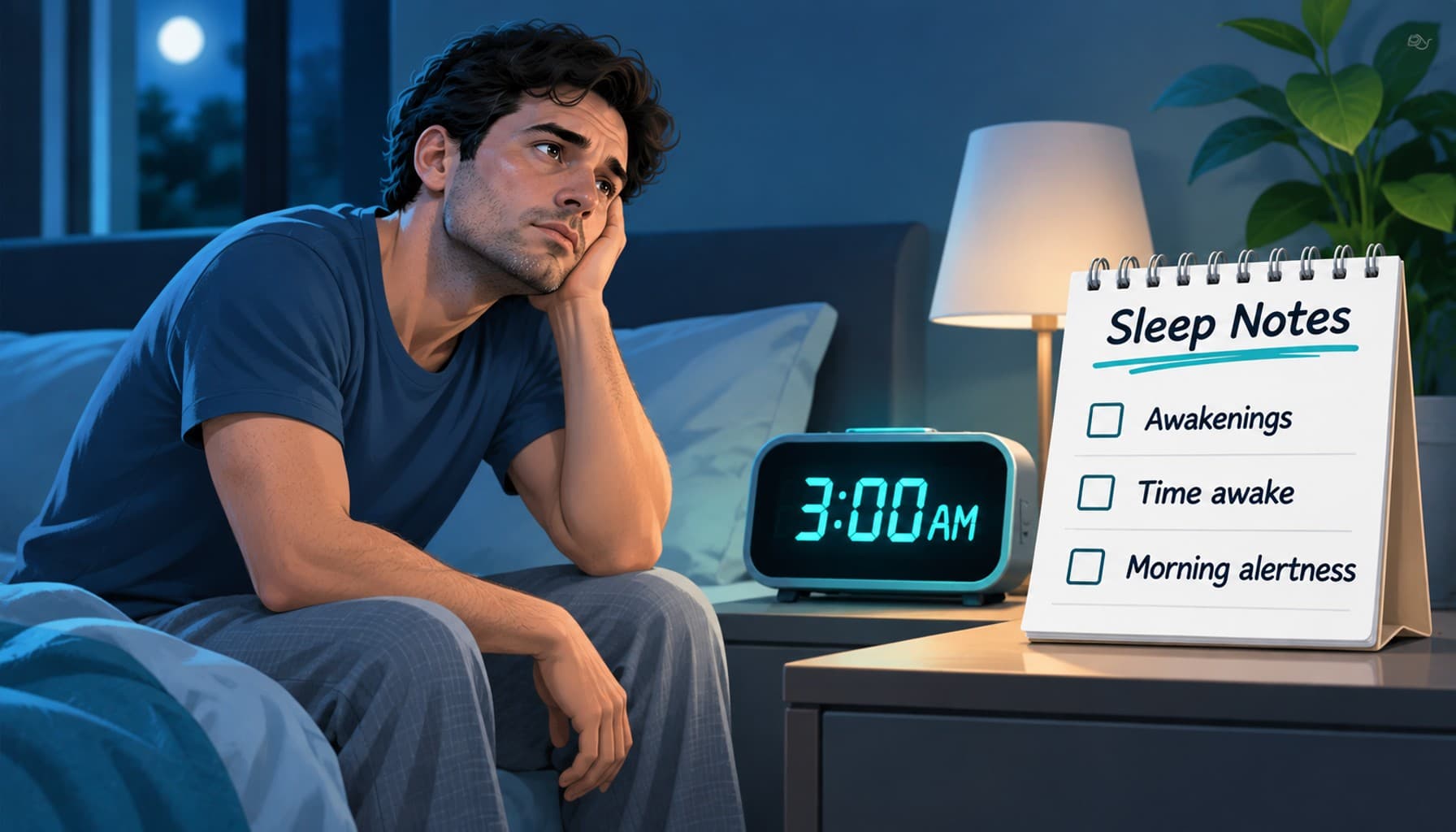
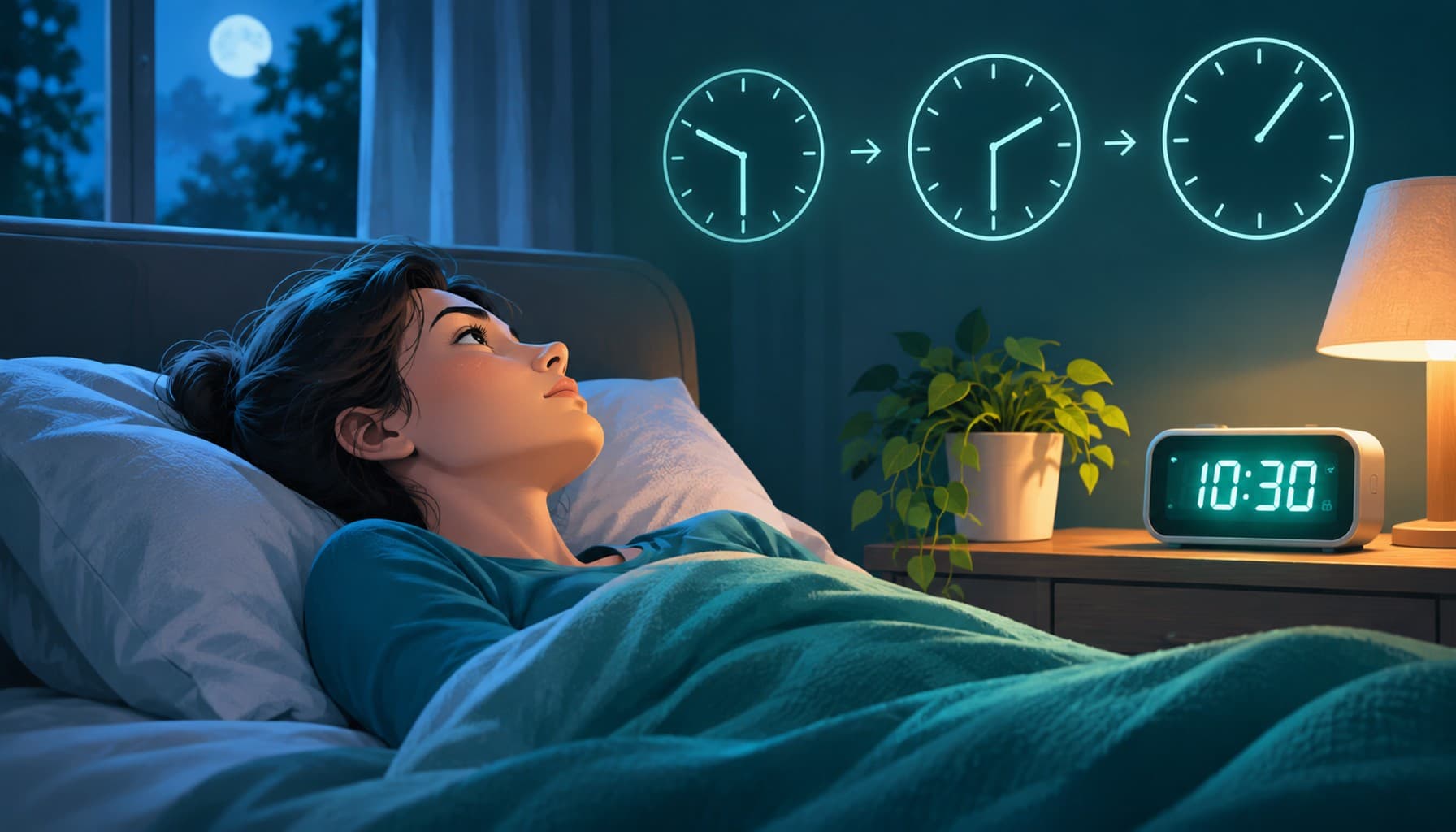
The lamp clicks off. The bedside clock glows 11:52, then 12:19, and your mind stays awake, already rehearsing tomorrow’s first meeting.
That is sleep-onset insomnia: difficulty falling asleep at the start of the night, as opposed to waking later once sleep has begun. Naming the pattern helps you describe the problem clearly, but it cannot choose a prescription. That decision still depends on a physician’s review of your individual information.
When nights like this repeat, you may want a fast answer, perhaps even the name of a pill. “I can’t sleep” is an honest summary, but it is too broad to be useful.
The most useful first step is not naming a pill. It is naming where the night is breaking down. Once you can describe that clearly, you will also understand what a physician still needs to decide.
Sleep-Onset Insomnia Describes Trouble Falling Asleep at the Beginning of the Night
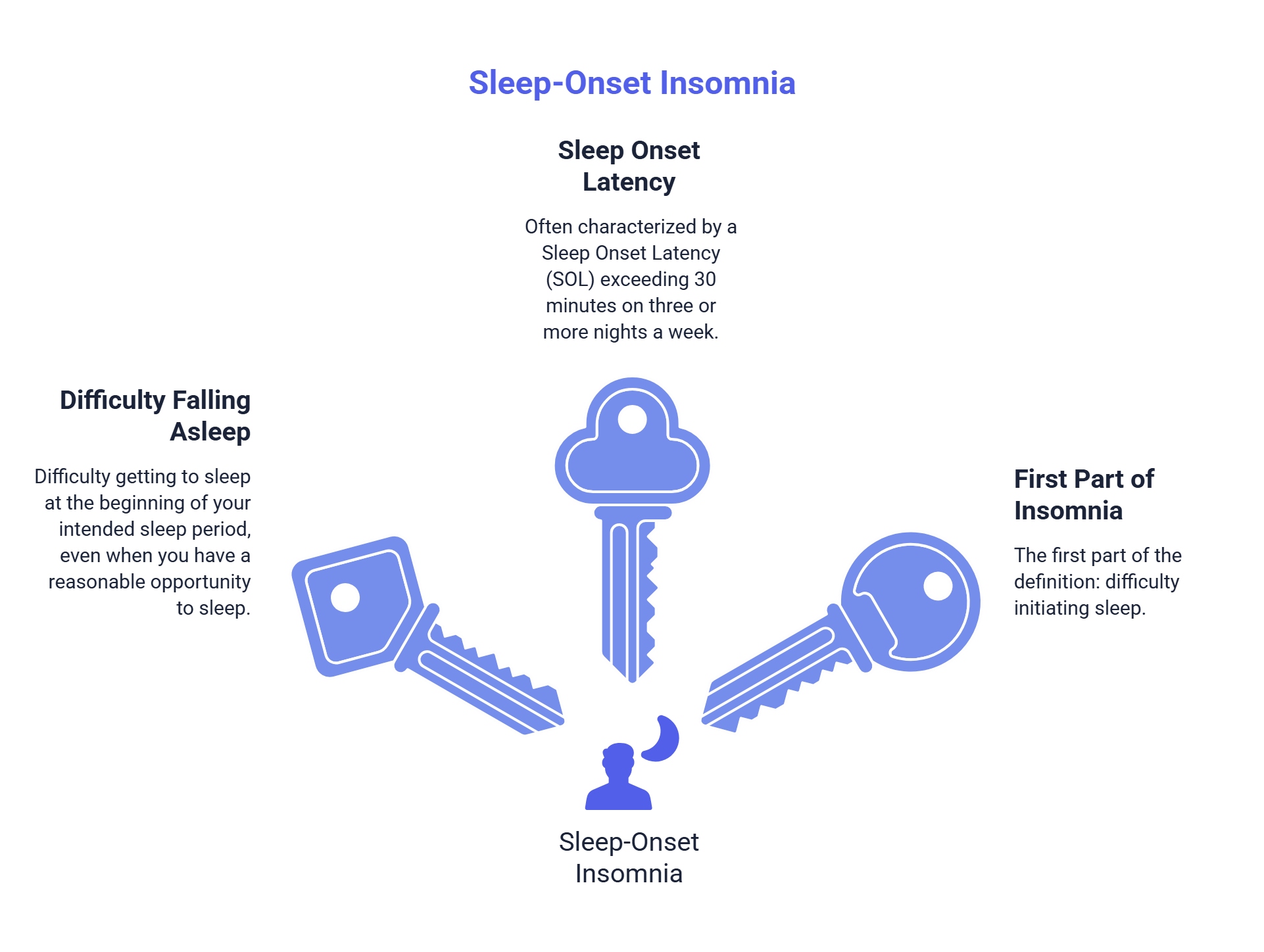
Sleep-onset insomnia describes difficulty getting to sleep at the beginning of your intended sleep period, even when you have a reasonable opportunity to sleep. It differs from falling asleep and then repeatedly waking later in the night, although some people experience both patterns.
Insomnia itself is a broad term. MedlinePlus defines insomnia as trouble falling asleep, staying asleep, or both. Sleep-onset insomnia refers to the first part of that definition: difficulty initiating sleep. In clinical sleep medicine, this is often characterized by a Sleep Onset Latency (SOL) exceeding 30 minutes on three or more nights a week, turning what should be a restful transition into a persistent stretch of wakefulness.
Picture the night as a route that begins at a doorway. With this pattern, the difficulty lies in getting through that first doorway, not in staying on the path afterward. The image is an aid to understanding, not an explanation of cause.
In practice, the scene is familiar. The lamp is off and the intended bedtime has arrived. Sleep does not begin as expected while your thoughts drift toward the next day or replay the day’s conversations. Sometimes there is no obvious explanation at all.
Describe that experience as it happens, without assigning it a cause. The aim is accuracy, not self-diagnosis. Trouble falling asleep does not, on its own, establish chronic insomnia or reveal what is driving it.
Bedtime Wakefulness and Middle-of-the-Night Waking Are Different Patterns
Lying awake after going to bed and waking after sleep has already begun are distinct experiences. The National Heart, Lung, and Blood Institute lists both among common insomnia symptoms, along with waking too early.
Bedtime difficulty | Later-night difficulty |
|---|---|
Trouble getting to sleep after going to bed | Falling asleep, then waking later |
The main disruption occurs at sleep onset | The main disruption occurs after sleep has begun |
Describe what happens before you first fall asleep | Describe when and how often you wake |
Two people can wake equally exhausted while struggling with different parts of the night. One lies awake long after bedtime, while the other falls asleep easily but wakes again and again. Saying only that “sleep is difficult” hides that difference. Explaining when the trouble starts gives a physician something specific to work with.
Some people experience both in the same night, a pattern often called mixed insomnia. Neither pattern is inherently more serious than the other. The distinction exists to improve communication, not to rank sleep problems or treatments.
Three Questions Can Make Your Sleep-Onset Pattern Easier to Describe
Three plain questions can turn “I can’t sleep” into a description a physician can actually use. None of them requires medical terminology or an elaborate tracking system. Answer them after observing several typical nights.
- What happens after you intend to go to sleep? Note whether you remain awake, feel mentally alert, or repeatedly try to settle without sleep beginning. Include roughly how long it lasts.
- Is the main problem getting to sleep, waking later, or both? Keep the answer descriptive. “Lights off, then awake for a long stretch” is more useful than a guessed label.
- What happens the next day when this repeats? Record practical effects such as tiredness, difficulty concentrating, or feeling unrested.
Put together, the answers might read like this: “After I go to bed, it takes a long time to fall asleep. Once I’m asleep, I usually stay asleep. When this repeats, I struggle to concentrate at work the next morning.” It is short, but it tells a physician where the night breaks down and what it costs the following day.
A brief sleep diary adds useful context. Over several nights, note your intended bedtime, roughly how long you lay awake, any nighttime waking, and how you felt the next day. The NHLBI recommends keeping a sleep diary and sharing those observations with a healthcare professional.
These answers describe the problem. They do not determine whether medication is suitable for you, or which prescription would fit.
A Sleep Pattern Cannot Pick a Prescription for You
Sleep-onset insomnia can describe where your sleep is disrupted, but it cannot select the right medication on its own. Searching for a pattern-to-pill match late at night, while exhausted, is a common trap.
Clinical guidance supports this boundary. The American Academy of Sleep Medicine’s guideline on medication for chronic insomnia treats trouble initiating sleep and trouble maintaining sleep as separate complaints. It also makes clear that medication choices depend on the individual patient rather than a single ranked list. Alongside clinical evaluation, evidence-based behavioral strategies—such as Cognitive Behavioral Therapy for Insomnia (CBT-I) techniques targeting stimulus control and sleep routines—frequently serve as valuable foundational tools that work in tandem with medical care.
Those individual factors include your health history, other medicines, previous treatment experiences, possible side effects, and any additional sleep symptoms. They matter most when next-day alertness, other health conditions, or concerns about dependence are part of the picture. Your description is an input, not a conclusion.
If you would like background before that conversation, the Medication Education Center explains the non-controlled options a physician may consider. These may include non-controlled medicines such as clonidine, trazodone, and hydroxyzine (often evaluated off-label for sleep onset), as well as doxepin (which is specifically FDA-approved for sleep maintenance rather than sleep onset), with mirtazapine reserved for selected cases. Suitability depends on a physician’s review of your sleep patterns and health profile, as these medicines are not interchangeable and none is chosen by sleep pattern alone.
Several general safety practices apply to any prescribed sleep medication:
- Share your full medication list and relevant health conditions with the prescriber.
- Follow the prescription label, and ask your pharmacist if anything is unclear.
- Avoid alcohol while taking a prescribed sedating medication.
- Do not change your dose or timing without guidance from the prescriber.
A medication being non-controlled does not mean it carries no risk. For advice about your own situation, consult a qualified healthcare professional.
Some Sleep Symptoms Need Testing or Local Care Before Prescription Aids
Certain symptoms change the next step, regardless of how clearly you describe bedtime. Breathing-related symptoms are the most important example.
Before an online prescription: what SleepScriptMD’s current rules require
Breathing symptoms: If you have been told you snore, gasp, or stop breathing during sleep, an at-home sleep test is required before any medication is prescribed. Medication is not sent until the results have been reviewed.
Eligibility: The standard pathway is for new, low-risk patients aged 18 to 65 who are not pregnant or planning a pregnancy. Some medical, mental health, or substance use conditions can make online prescribing unsuitable.
Local care: Possible narcolepsy, REM Sleep Behavior Disorder, and Restless Legs Syndrome are not treated through SleepScriptMD and call for in-person care.
These conditions can show up in several ways:
- Possible narcolepsy: unexpected daytime sleep or sudden muscle weakness.
- REM Sleep Behavior Disorder: shouting, kicking, or otherwise acting out dreams.
- Restless Legs Syndrome: an uncomfortable urge to move the legs while resting.
If any of these apply, a local sleep specialist or primary care provider is the right starting point.
A Physician-Reviewed Next Step Starts With the Pattern, Not an Automatic Prescription
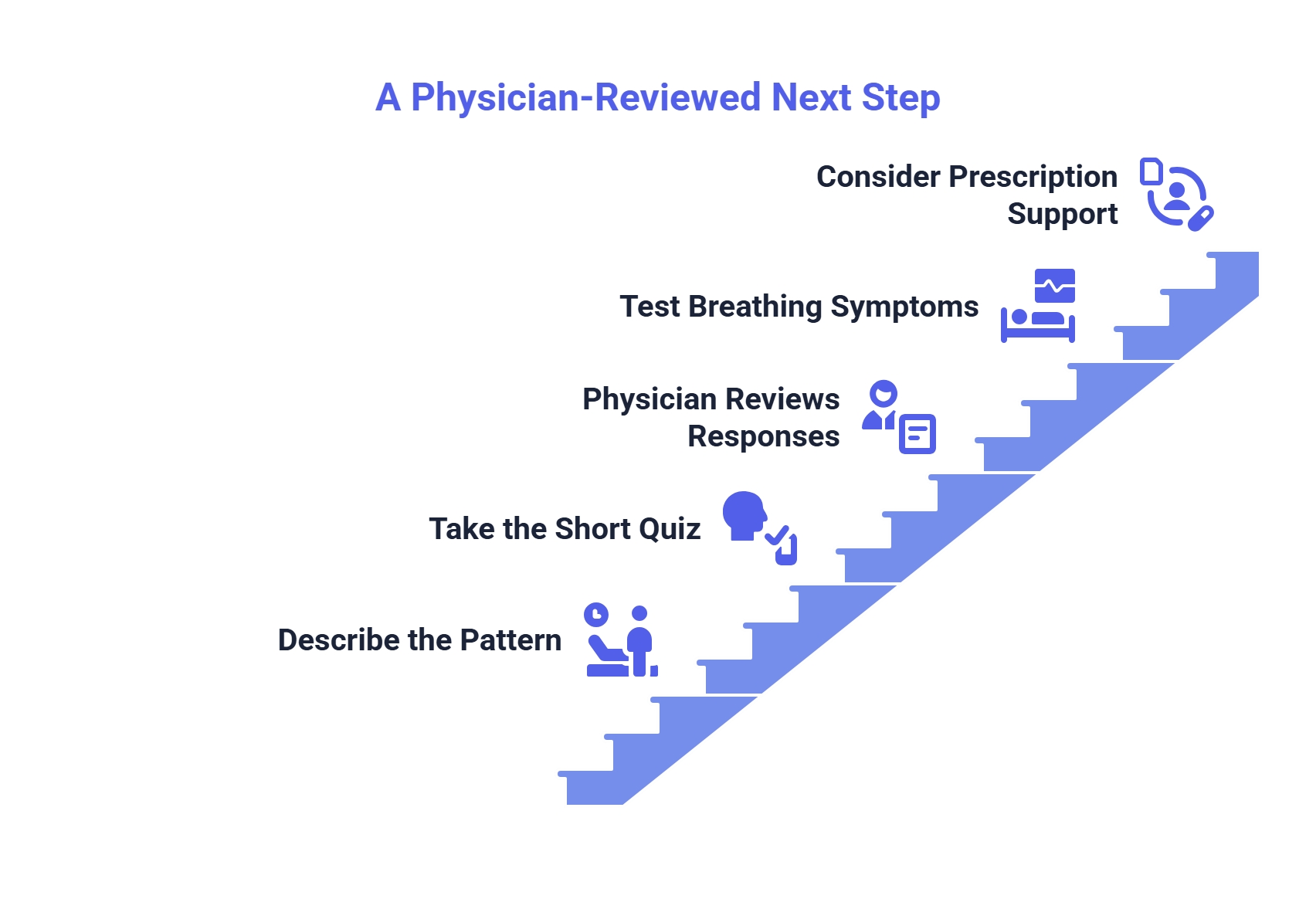
When nighttime patterns persist despite supportive sleep habits, a focused medical evaluation can help determine whether non-habit-forming prescription support is appropriate for your situation.
SleepScriptMD offers text-based care for insomnia. You complete a short quiz about your sleep on your own schedule, and a board-certified physician reviews your responses. If you report breathing symptoms, the at-home sleep test comes first. If a non-habit-forming prescription is appropriate, it is sent to your pharmacy.
The exact steps can vary by location, because some states require a brief virtual visit before prescribing. Approval is not automatic in any state. That is the purpose of physician review, and it is where your three answers become useful.
Picture the same night again. The lamp clicks off, the clock glows, and sleep may still take its time. This time, though, you know what you are looking at: a sleep-onset pattern, perhaps a mixed one, with next-day effects you can name.
If you are not yet sure how your pattern fits, the Medication Education Center is a low-pressure place to start. You can also learn about non-addictive sleep medication options before deciding.
Where the night breaks down is worth describing. It is not enough to pick a pill. When you are ready, take the short sleep quiz, and a physician will review your responses and decide whether a non-habit-forming prescription is appropriate.
Disclaimer: This article provides general information about sleep-onset insomnia and prescription sleep aids for educational purposes. Individual circumstances vary significantly based on factors such as the pattern of sleep difficulty, medical history, other medications, breathing-related sleep symptoms, and other possible sleep conditions. For personalized guidance about whether prescription sleep medication is appropriate for your situation, consult a qualified healthcare professional.
Our Editorial Process
Our expert team uses AI tools to help organize and structure our initial drafts. Every piece is then extensively rewritten, fact-checked, and enriched with first-hand insights and experiences by expert humans on our Insights Team to ensure accuracy and clarity.
About the SleepScriptMD Insights Team
The SleepScriptMD Insights Team is our dedicated engine for synthesizing complex topics into clear, helpful guides. While our content is thoroughly reviewed for clarity and accuracy, it is for informational purposes and should not replace professional advice.