
Non-Controlled Sleep Medications for Insomnia: The Pattern-Fit Guide to Reliable Sleep and Clear Mornings

Stylized bedside dashboard showing clonidine, trazodone, and hydroxyzine cards, a clock highlighting a 30–60 minute dosing window, and a morning clarity gauge.

📌 Key Takeaways Non-controlled prescription sleep medications work reliably when matched to your specific insomnia pattern and taken in consistent timing windows. Match Medication to Pattern: Clonidine calms racing thoughts, trazodone reduces nighttime awakenings, and hydroxyzine quiets anxiety-driven insomnia. Timing Beats Dose Adjustments: Taking your medication in the same 30-60 minute window each night prevents […]

Prescription Sleep Aids for Insomnia: What to Avoid (Plain-English Safety Without Scare Tactics)

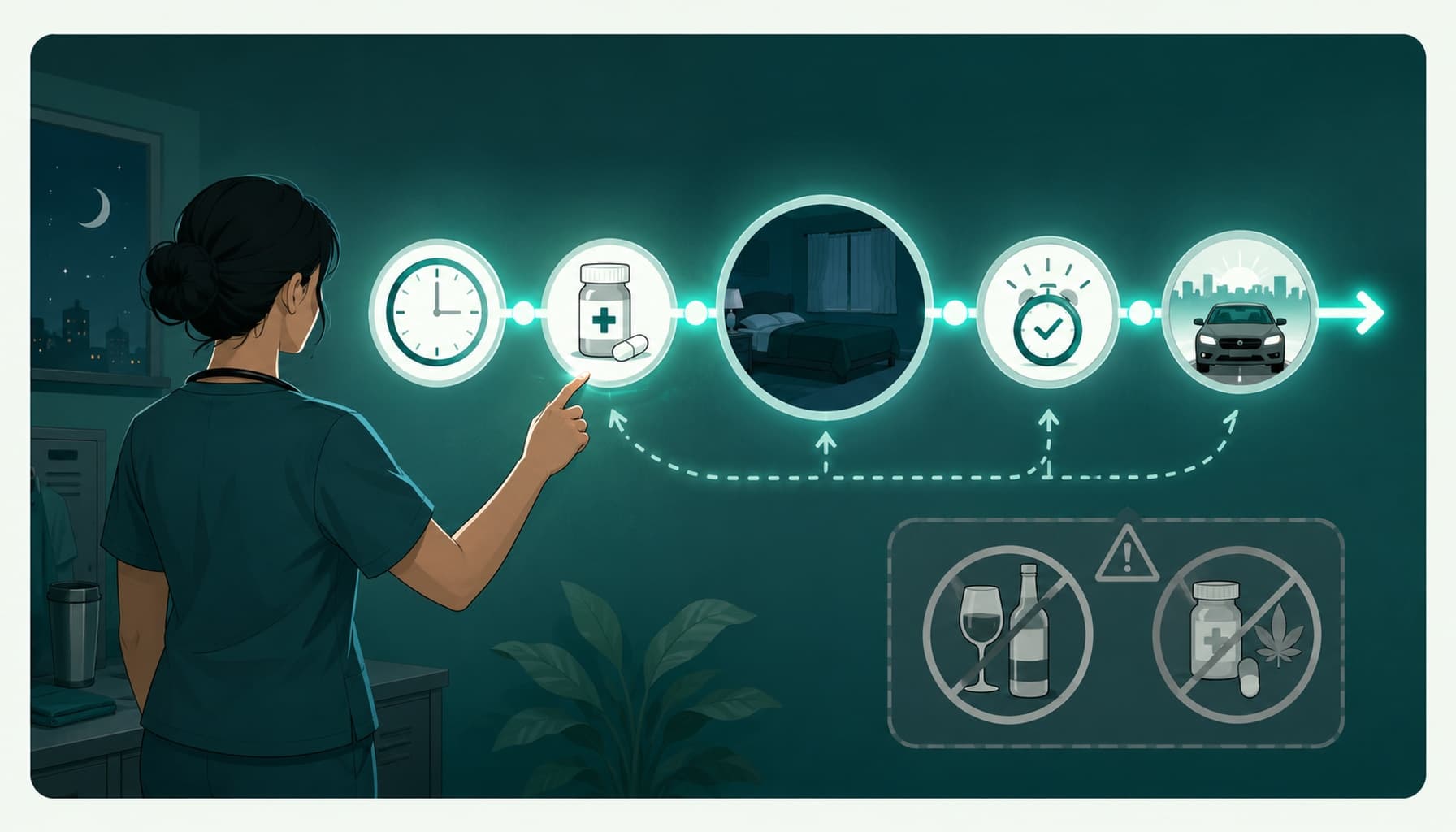
Stylized bedside illustration of a clock highlighting a glowing 30-minute dosing window, pill bottle and phone in night mode.

📌 Key Takeaways Non-controlled sleep medications like Trazodone, Hydroxyzine, and Clonidine work effectively when you protect them with consistent timing and avoid stacking sedating substances. Timing Consistency Prevents Grogginess: Taking medication in the same 30-minute window nightly and allowing 7-8 hours before waking minimizes next-day sedation. Avoid Sedative Stacking: Combining your prescription with alcohol, OTC […]

Prescription Sleep Aids for Insomnia vs. OTC Remedies: When Supervised, Non-Controlled Options Make Sense

Bedside with alarm (9:45 PM), pill bottle, and glowing timing slider labeled 10:00–10:30 PM — clinician-set dosing visual.

📌 Key Takeaways Persistent insomnia affecting work performance benefits from supervised, non-controlled prescription care when OTC trial-and-error creates more problems than it solves. Frequency Plus Impact Signals Escalation: If sleep trouble occurs three or more nights weekly and affects next-day function, supervised care often outperforms continued OTC experimentation. Timing Windows Protect Mornings: Clinicians select medications […]

Non-Controlled Sleep Medications Side Effects: A Plain-English Guide to Managing Common, Mild Effects

Stylized bedside clock highlighted “15–30 min” as a hand nudges it earlier beside a pill bottle, suggesting a timing tweak.

📌 Key Takeaways Morning grogginess from non-controlled sleep medications usually signals a timing issue, not the wrong prescription—simple adjustments within your first week resolve most discomfort. Timing Beats Dose Changes: Shifting your medication 15–30 minutes earlier often eliminates morning fog without changing your prescription strength. Track With a Clarity Score: Rating your morning alertness daily […]

Prescription Sleep Aids for Insomnia: Timing Windows to Avoid Next-Day Grogginess

Stylized bedside clock with a glowing timing arc behind a pill bottle and toothbrush cue, showing the same window nightly.

📌 Key Takeaways Morning grogginess from prescription sleep aids usually signals a timing problem, not a medication problem. Consistency Beats Strength: Taking your medication within the same 30-minute window each night prevents unpredictable wake-up clarity more reliably than dosage changes. Track With a 1-10 Score: Rating your morning alertness daily for seven nights reveals the […]

What to Expect from a Safety-First Sleep Consult

Stylized illustration of a clinician verifying a floating telehealth safety checklist with calendar and portal icons.

Key Takeaways Reliable sleep before high-stakes days requires a plan that delivers clarity without dependency or morning fog. Safety-First Means Physician Review: Every prescription decision begins with contraindication screening and eligibility verification to ensure non-controlled medications are appropriate for your specific health profile. Continuity Over Quick Fixes: The care model emphasizes ongoing monthly subscriptions, scheduled […]

Non-Addictive Sleep Medications: How Safety-First Prescriptions Support Rest When It Matters Most

Decision-flow infographic matching sleep symptoms to non-addictive medications with physician approval badge.

Key Takeaways Safe, non-addictive prescription sleep medications exist—and they work without the dependency risks of controlled substances. Non-Controlled Means Non-Addictive: Medications like trazodone, hydroxyzine, clonidine, and low-dose doxepin provide effective sleep support without creating physical dependence or tolerance. Matching Medication to Sleep Pattern Matters: Sleep onset issues respond best to hydroxyzine or clonidine, while sleep […]

Timing Matters: How to Avoid Next-Day Grogginess with Non-Addictive Sleep Aids

sleeping medications

📌 Key Takeaways Next-day grogginess isn’t inevitable—it’s usually the result of mistimed dosing that overlaps your waking hours. The 8-Hour Rule Prevents Morning Fog: Plan roughly 8 hours between taking your sleep aid and your intended wake time to allow adequate clearance and avoid residual sedation. Your Chronotype Determines Optimal Timing: Early birds and night […]

How Non-Controlled Sleep Medications Work (Without Dependency)

sleep medications

📌 Key Takeaways Reliable sleep doesn’t require risking dependency when you choose non-controlled medications with proper medical guidance. Non-Controlled Means Lower Risk: These medications aren’t classified as controlled substances, which translates to reduced dependency potential when used as directed under clinical supervision. Timing Prevents Morning Fog: Following your personalized dosing window and avoiding “stacking” sedating […]

Managing Morning Grogginess: Tips for Adjusting to a New Sleep Medication

sleep medication

📌 Key Takeaways Morning Grogginess is a Common, Manageable Adjustment: Morning tiredness after starting medications like Trazodone or Hydroxyzine is a well-documented side effect that many people experience as their body adjusts to new treatment. This grogginess typically indicates the medication is working to promote restorative sleep, not that something is wrong. Simple Timing Changes […]

No Sleep Doctor Nearby? A Complete Guide to Getting Safe Insomnia Treatment Online

prescription sleep aids for insomnia

Key Takeaways Access to Sleep Care Without Geographic Barriers: Telehealth for insomnia enables access to care for people in rural and underserved communities who previously had limited options, connecting patients with licensed physicians through AI-assisted assessments or virtual consultations without requiring travel to distant specialists. Real Doctor Oversight, Not Automated Prescribing: Every prescription decision involves […]

6-Step Sleep Hygiene Plan: A Practical Guide for Better Sleep

Why Sleep Hygiene MattersHealthy sleep is built on habits—what we call sleep hygiene. Disruptions like late-night screen time, inconsistent schedules, and an overstimulating environment can throw off your body’s natural rhythms. The good news? Research shows small, science-backed changes can dramatically improve sleep—without relying on medications. This guide distills everything into six key areas. Start […]

The Intricate Link Between Insomnia and Health: Unveiling the Impact of Sleep on Mental Well-being

In today’s fast-paced world, the importance of quality sleep cannot be overstated, particularly when considering its profound impact on mental health. A pivotal study titled “The Intricate Link Between Insomnia and Health: Unveiling the Impact of Sleep on Mental Well-being,” led by Odessa S. Hamilton and published in Translational Psychiatry, highlights a critical connection: individuals […]

Understanding Narcolepsy: Symptoms, Subtypes, and Diagnosis

Struggling with persistent daytime drowsiness or unexpected muscle weakness? At SleepScriptMD, we address a wide range of sleep concerns and stay abreast of the latest research to provide comprehensive care. While we do not specialize in treating narcolepsy, we recognize that many individuals seeking help for sleep issues may have undiagnosed narcolepsy. Our goal is […]

Trazodone for Insomnia: What You Need to Know

Trazodone, a medication initially developed as an antidepressant, has gained widespread use as an off-label treatment for insomnia. Although it is not FDA-approved specifically for sleep disorders, research suggests it can significantly enhance slow-wave (deep) sleep, making it a viable option for those struggling with persistent insomnia. This guide provides an overview of trazodone’s effectiveness, […]

The Role of Orexin Receptor Antagonists in Treating Insomnia: What the Research Says

Struggling to fall asleep or stay asleep through the night? Insomnia is more than just an inconvenience—it affects energy levels, mood, and overall health. While cognitive behavioral therapy (CBT) is often the recommended first-line treatment, many people turn to medications due to accessibility challenges. SleepScriptMD is a physician-led practice that specializes in addressing complex sleep […]

The Link Between Physical Activity and Better Sleep: What Science Says

Struggling with insomnia? You’re not alone. Millions of adults experience chronic sleep issues, affecting everything from mood to overall health. But what if there was a natural way to improve your sleep—without medication? New research suggests that increasing physical activity to meet public health guidelines can significantly enhance sleep quality and mental well-being. This guide […]

The Link Between Sleep and Athletic Performance: How Quality Sleep Boosts Recovery

If you’re an athlete or someone who exercises regularly, you’re probably focused on diet and training. But what about sleep? Sleep is just as crucial as nutrition and exercise when it comes to performance, recovery, and overall health. Unfortunately, many athletes experience insufficient sleep, which can impair reaction times, endurance, strength, and even decision-making skills […]

Understanding REM Sleep Behavior Disorder: Causes, Symptoms, and Treatment

This guide is for informational purposes only and not a substitute for medical advice. Any treatment—whether a supplement, medication, procedure, injection, therapy, or device—carries potential risks, especially when used in excess or by individuals with certain medical conditions or genetic predispositions. Always consult a qualified healthcare provider before starting any treatment. What is REM Sleep […]

Mirtazapine (Remeron): A Potential Aid for Insomnia Treatment

The physicians at SleepScriptMD have over 30 years of combined experience helping patients achieve better sleep. At SleepScriptMD.com, we use both synchronous and AI-assisted asynchronous treatments to manage sleep disorders, providing safe, non-addictive medication and supplement options. This guide is for informational purposes only and not a substitute for medical advice. Any treatment—whether a supplement, […]

The Cardiac Safety of Low-Dose Doxepin in Insomnia Management

For many people, overcoming insomnia is a significant challenge, but at SleepScriptMD.com, Dr. David Danish and Dr. Peter Kelly are dedicated to delivering expert care tailored to each individual’s needs. With over 30 years of combined experience in treating insomnia, we frequently incorporate low-dose doxepin into our treatment regimens. This medication has demonstrated remarkable efficacy […]

Is Doxepin Safe for Sleep? What the Research Says About Low-Dose Use for Insomnia

Many patients worry about the safety of medications used for sleep, especially if they have heard concerns about heart rhythm effects with certain antidepressants. Doxepin, originally developed as an antidepressant, is now FDA-approved in much lower doses (3 mg and 6 mg) for treating insomnia—well below the amounts used for depression. At these low doses, […]

Insomnia and Hyperparathyroidism: Understanding the Connection

The physicians at SleepScriptMD.com have treated countless patients suffering from insomnia, many of whom have underlying medical conditions contributing to their sleep disturbances. One lesser-known cause of insomnia is primary hyperparathyroidism (PHPT)—a condition where overactive parathyroid glands produce excessive parathyroid hormone (PTH), leading to elevated calcium levels in the blood. This biochemical imbalance can result […]

How Poor Sleep Affects Brain Health: What the Research Reveals

Sleep isn’t just about feeling well-rested; it plays a critical role in maintaining brain health. Research increasingly shows that poor sleep—whether too little, too much, or disrupted—can negatively impact brain structure, potentially contributing to cognitive decline and even neurodegeneration. SleepScriptMD is a physician-led company that provides tailored sleep solutions to help individuals address chronic sleep […]

How Menopause Disrupts Sleep—And What You Can Do About It

Struggling with Sleep During Menopause? You’re Not Alone If you’re in your 40s or 50s and suddenly finding it harder to get a good night’s sleep, menopause might be the culprit. Many women experience difficulty falling asleep, frequent nighttime awakenings, and unrefreshing sleep as they transition through menopause. In fact, research shows that sleep disturbances […]

How Daylight Saving Time Disrupts Sleep and Health

Introduction Twice a year, millions of people experience disrupted sleep due to Daylight Saving Time (DST). That lost hour in the spring or the sudden shift in autumn can do more than just leave you feeling groggy—it can throw your entire circadian rhythm off balance. At SleepScriptMD, we’ve seen firsthand how disrupted sleep patterns affect […]

The Most Common Causes of OSA and How to Reduce Your Risk

Obstructive Sleep Apnea (OSA) is a serious sleep disorder that affects millions of adults, often without them realizing it. Repeated interruptions in breathing during sleep can lead to fatigue, high blood pressure, heart disease, and even cognitive decline. Many people dismiss snoring or daytime sleepiness as minor inconveniences, but untreated OSA can have major health […]

A Breakthrough in Insomnia Treatment? Why Clonidine Outperforms Zopiclone

The Problem: Poor Sleep Solutions & Dangerous Prescribing Practices If you struggle with chronic pain and insomnia, you’ve likely been handed a one-size-fits-all prescription for a sedative-hypnotic like zopiclone or a benzodiazepine. But here’s the truth: ❌ These drugs often fail to improve sleep long-term. ❌ They come with serious risks—confusion, falls, dependence, and withdrawal. […]