
📌 Key Takeaways
Asynchronous sleep care may help eligible adults start physician-reviewed insomnia treatment without making a live visit the first step.
- Start Without Waiting: Online intake lets eligible adults share sleep details without scheduling a live appointment first.
- Clinicians Still Decide: A form starts the process, but a licensed clinician decides whether treatment fits safely.
- Video May Be Needed: Some states or safety concerns may still call for a quick video visit.
- Non-Controlled Options Matter: SleepScriptMD focuses on non-controlled sleep medications, not habit-forming drugs like Ambien or Xanax.
- Safety Comes First: Symptoms like heavy snoring, breathing pauses, pregnancy, or severe mental health concerns may need local care.
Fewer scheduling barriers should never mean less medical review.
Adults ages 18–64 with persistent insomnia will gain a clearer view of this care path, preparing them for the detailed overview that follows.
~ ~ ~ ~ ~ ~ ~ ~ ~ ~ ~ ~ ~ ~ ~ ~ ~ ~
The appointment is the problem.
You may be exhausted, wired, and ready for help, but the idea of scheduling a live visit can feel like one more thing standing between you and sleep. Maybe you work irregular hours. Maybe your only quiet window is after everyone else leaves for the day. Maybe you just do not want to sit on camera explaining your insomnia again.
Asynchronous sleep care is designed for that moment. It gives eligible adults a way to start physician-reviewed sleep medication care without making a live appointment the default first step.
You still get real medical review. You still answer detailed health questions. You still need a clinician to decide whether treatment is safe and appropriate.
You just do not have to start with a waiting room.
What You’ll Learn
You will understand how asynchronous sleep care works, what happens after you submit your intake, when a quick video visit may be required, and how SleepScriptMD keeps the process focused on safe, non-controlled prescription options.
The goal is simple: to determine if this care pathway aligns with your specific sleep architecture before initiating intake.
What Asynchronous Sleep Care Means
Asynchronous care means your medical information is submitted securely online and reviewed later by a licensed clinician. You and the clinician do not need to be online at the same time for the first step.
HHS describes asynchronous telehealth as “store-and-forward” care, where patient information is sent to a provider for review at a different time. It is often used for intake, follow-up, secure messaging, and review of health information. HHS explains asynchronous telehealth on its official Telehealth resources page. Telehealth can also include messaging with a provider and tools that allow health information to be shared remotely.
For SleepScriptMD, that means you begin with an online sleep and medical intake. A clinician reviews your information. If you are eligible and treatment is appropriate, a prescription can be sent to your local pharmacy.
That last part matters. The form does not approve treatment. A clinician does.
How the SleepScriptMD Process Works
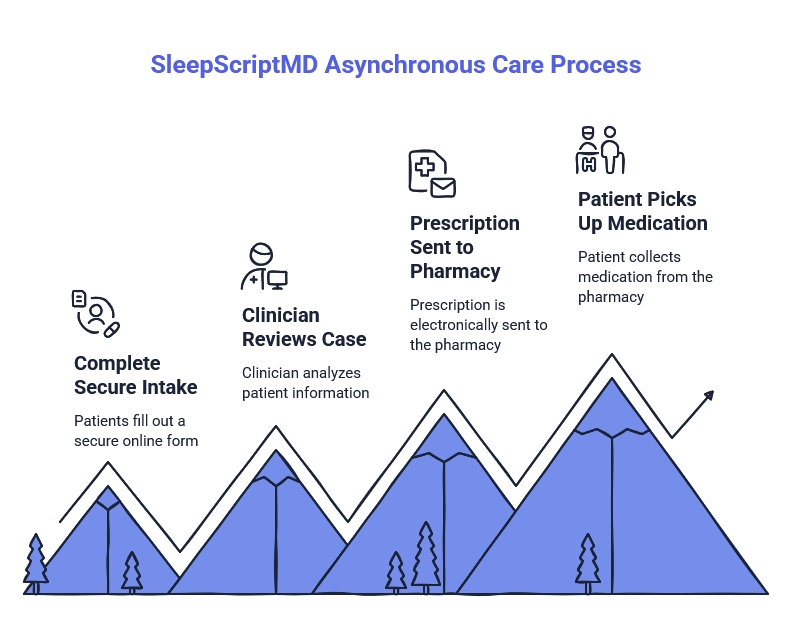
The process is built for people who want care that is efficient, private, and medically responsible.
- Complete the secure intake
You answer questions about your sleep pattern, health history, medications, and safety factors. You can do this from your phone or computer, at a time that fits your schedule. - A clinician reviews your case
The clinician looks for details that could affect medication choice, such as other prescriptions, medical conditions, or symptoms that suggest a different kind of sleep problem. - If approved, your prescription is sent to your pharmacy
If the clinician determines that medication is appropriate, the prescription is sent electronically to your chosen local pharmacy. You pick up the medication there.
That is the core idea behind SleepScriptMD’s asynchronous care model: less scheduling friction, without removing medical oversight.
Where Medication Fits In
SleepScriptMD is medication-forward because many adults with persistent insomnia are not looking for a long therapy program as their first step. They want safe, practical medical support that fits real life.
The focus is on non-controlled prescription sleep aids, not benzodiazepines or Z-drugs. SleepScriptMD does not prescribe controlled substances such as Ambien, Xanax, or similar habit-forming sedatives.
Common non-controlled options may include medications such as trazodone or hydroxyzine. Clonidine may also be considered when a clinician determines it is appropriate following a specific cardiovascular safety screening. These medications are used differently depending on the sleep pattern. Someone who cannot fall asleep may need a different option than someone who wakes repeatedly at 3:17 a.m. and cannot settle again.
You can review the medication options on the non-addictive sleep med treatments page.
Medication is not treated casually. It is also not framed as scary or unusual. For many eligible adults, non-controlled sleep medications are routine, practical tools when selected and monitored by a qualified clinician.
When a Quick Video Visit May Be Required
Most people who choose asynchronous care are trying to avoid unnecessary live appointments. That makes sense. A live visit can be hard to schedule, especially when your sleep window is already fragile.
A quick video visit may still be required in some cases.
The most common reason is state law. Telehealth rules vary by state, and providers must follow the rules that apply to where care is delivered. HHS notes that cross-state telehealth practice depends on state regulations and licensure requirements.
A video visit may also be needed if the clinician needs clarification. For example, your intake may raise a question about medication safety, symptoms, or whether your sleep concern fits online treatment.
That is not a bait-and-switch. It is a safety step.
The purpose is to make sure the right patients receive the right level of care.
Practical Safety and Eligibility
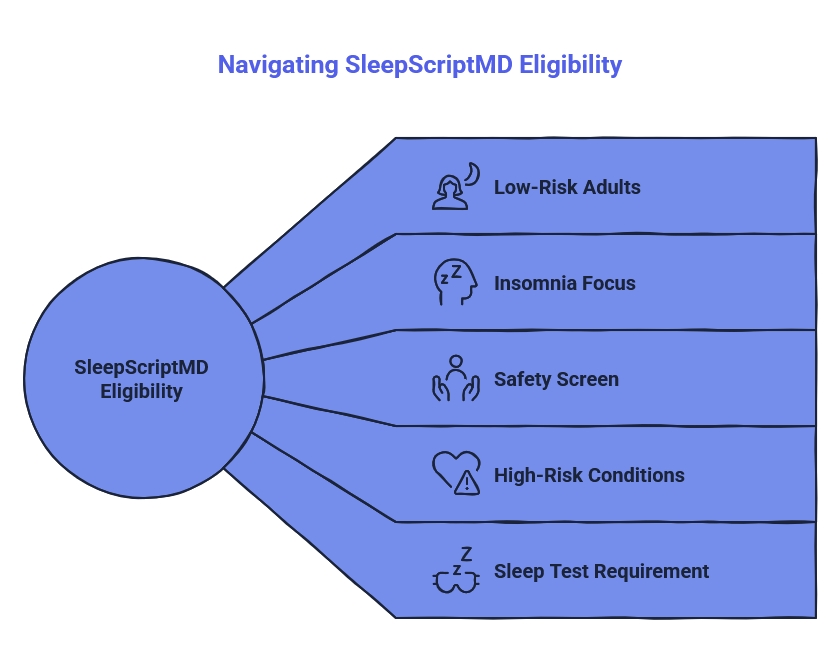
SleepScriptMD is designed for low-risk adults ages 18–64 who need help with persistent insomnia and want a safe, non-controlled medication path.
A practical safety screen helps identify whether online care is the right fit. Some people should be directed to local care instead.
You may need in-person or specialist care if you have symptoms that suggest narcolepsy, REM Sleep Behavior Disorder, active Restless Legs Syndrome, severe mental health concerns, active substance-use concerns, pregnancy, or a sleep-breathing issue that needs testing first.
If you snore heavily, gasp, or stop breathing during sleep, a sleep test may be needed before medication treatment begins. That step helps avoid treating the wrong problem.
This is straightforward medical caution, not alarm. The point is to protect eligible patients and redirect higher-risk situations to the right care setting.
Privacy and Medical Review
Online sleep care should still feel private and legitimate.
HIPAA rules establish standards for protecting patients’ health information, and covered telehealth providers must comply with those rules. HHS explains HIPAA rules for telehealth technology here. The HIPAA Privacy Rule also sets safeguards around how protected health information can be used and disclosed.
That privacy layer matters because good sleep care requires honest answers. Your clinician needs to know what you take, how you sleep, when you wake, and what has already failed.
A rushed appointment can make people leave things out. A structured intake can help you give a clearer picture.
What Happens After Approval
If treatment is approved, your prescription is sent to your chosen local pharmacy. The medication cost is handled separately at the pharmacy.
For current visit fees and payment details, check the SleepScriptMD Pricing page. Pricing can change, so the pricing page is the right place for up-to-date information.
After that, the practical work begins. You take the medication as directed, avoid alcohol unless your clinician says otherwise, and tell your provider about other medications or supplements you use. If you notice common effects such as next-morning drowsiness, dry mouth, or timing issues, your provider may offer practical guidance.
Simple adjustments can make a real difference.
Is Asynchronous Sleep Care Right for You?
Asynchronous sleep care may be a strong fit if you want physician-reviewed help without starting with a live appointment. It may also fit if you have already tried over-the-counter sleep aids and want a supervised, non-controlled option instead of guessing again in the pharmacy aisle.
It is not the right fit for everyone. That is why the intake and review matter.
You are not just looking for a fast answer. You are looking for a safe answer that fits your sleep pattern, your schedule, and your health history.
Frequently Asked Questions
Do you have to get on a video call?
Not always. Many eligible patients can start with asynchronous intake. A brief video visit may be required in some states or when a clinician needs more information before prescribing.
Is asynchronous care just an online form?
No. The form collects your information. The medical decision comes from clinician review.
Can this help if over-the-counter sleep aids leave you groggy?
It may. A clinician can review whether a non-controlled prescription option is a better fit for your sleep pattern and morning clarity needs.
Where should you start?
Start with the secure intake. You can also review medication options first if you want to understand what SleepScriptMD offers.
Start Your Sleep Treatment
You do not need to keep waiting for the perfect appointment time.
If persistent insomnia is affecting your day, your focus, or your ability to function, a medication-forward, safety-first path may be worth considering. SleepScriptMD gives eligible adults a practical way to start care, learn which non-controlled options may fit, and avoid unnecessary scheduling friction where asynchronous care is permitted.
Start here: Start Your Sleep Treatment.
Or review your options first: See which meds we offer.
Disclaimer: This article is for educational purposes only and does not replace medical advice, diagnosis, or treatment from a licensed clinician. Sleep medications are not appropriate for everyone. If you have symptoms that may require in-person evaluation, seek local medical care or emergency support as appropriate.
Our Editorial Process:
Our expert team uses AI tools to help organize and structure our initial drafts. Every piece is then extensively rewritten, fact-checked, and enriched with first-hand insights and experiences by expert humans on our Insights Team to ensure accuracy and clarity.
About the SleepScriptMD Insights Team:
The SleepScriptMD Insights Team is our dedicated engine for synthesizing complex topics into clear, helpful guides. While our content is thoroughly reviewed for clarity and accuracy, it is for informational purposes and should not replace professional advice.